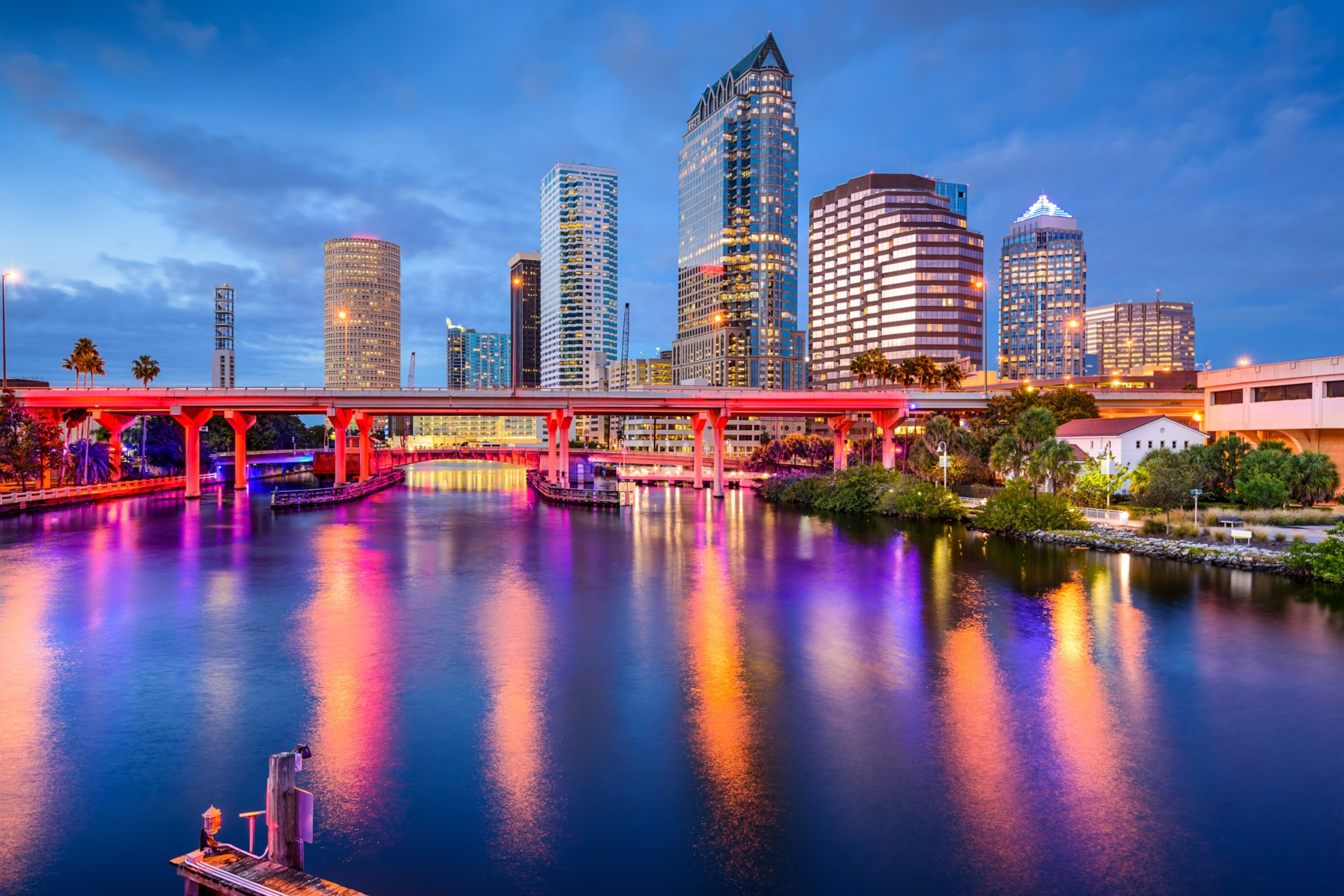
An improvement exchange lets a Tampa investor use exchange funds to build or renovate the replacement property rather than buy it strictly as-is, which opens up options in submarkets like Ybor City or Seminole Heights where the right asset needs work before it's worth what the relinquished property sold for.
How Construction Fits Inside the 180-Day Window
Improvements need to be completed, with title held by an exchange accommodation titleholder, within the 180-day period. Anything unfinished by that closing counts as personal property rather than real property for exchange purposes, which changes the tax outcome even if construction wraps up shortly afterward.
This makes the improvement exchange fundamentally different from a standard purchase, since the deadline governs construction progress, not merely paperwork and financing.
Investors sometimes assume the clock is more forgiving for construction than for a standard closing, but the 180 days applies exactly the same way, which is why the construction schedule needs to be built backward from that fixed date rather than estimated forward from a groundbreaking date.
What Has to Be in Place Before Ground Breaks
Before construction starts, an improvement exchange generally needs these pieces confirmed:
- an exchange accommodation titleholder holding legal title during construction
- a qualified intermediary tracking funds disbursed to contractors
- a construction budget and draw schedule scoped realistically against the 180-day deadline
- permitting and inspection timelines confirmed with the local building department
- a contractor with a realistic completion schedule inside the exchange window
Why 180 Days Is a Tight Runway for Construction
Tampa Bay permitting timelines, hurricane-season material and labor delays, and inspection scheduling can push even a modest renovation scope past the deadline if it isn't planned for from day one, rather than treated as a flexible add-on to the purchase.
Investors who've run construction projects outside the exchange structure sometimes underestimate how unforgiving the 180-day cutoff is compared to a normal project timeline, where a two-week slip is routine and rarely changes the outcome.
Building a two-week buffer into the construction schedule from the start, rather than treating the 180-day mark as the target completion date itself, gives a Tampa Bay improvement exchange some room to absorb a permitting delay without immediately jeopardizing the whole structure.
Value at the Deadline, Not Value at Completion
Only work actually completed and paid for within the 180 days counts toward the exchange value. Unfinished improvements at the deadline are generally excluded from the exchange or treated as boot, which changes the outcome even when construction later finishes as originally planned.
This is why a conservative Tampa Bay improvement exchange budget usually front-loads the highest-value work - the pieces that add the most to appraised value - earlier in the schedule, rather than saving the biggest line items for the final weeks when a delay has the least room to be absorbed.
Where an Accommodation Titleholder Fits In
An exchange accommodation titleholder holds legal title while improvements are made, so the investor doesn't take title to an unfinished property, and funds flow through the qualified intermediary to the contractor rather than to the investor directly.
Choosing an accommodation titleholder experienced with Florida construction projects specifically, rather than a generic national provider unfamiliar with Tampa Bay permitting norms, tends to smooth out the draw-request and inspection process considerably compared to working with an entity handling its first Florida deal.
Choosing Between an Improvement Exchange and a Simpler Purchase
An improvement exchange adds real coordination cost - the accommodation titleholder, a stricter draw schedule, and a harder deadline for construction than a typical Tampa Bay renovation project would face on its own. For investors targeting a property in Ybor City or Seminole Heights that only needs cosmetic work, a standard purchase followed by post-closing improvements funded outside the exchange is often simpler.
The improvement structure earns its complexity when the gap between as-is value and improved value is large enough that skipping it would mean identifying a smaller, less useful replacement property than the exchange proceeds could otherwise support.
A rough rule some Tampa investors use is weighing the improvement exchange only when construction cost is a meaningful share of total exchange value; for smaller cosmetic budgets, the added coordination usually isn't worth the deadline risk it introduces.
Common 1031 Exchange Questions
Can I use exchange funds to renovate a property I already own?
No, improvement exchanges apply to the replacement property acquired during the exchange, not to property the investor already holds outside the transaction.
What happens if construction isn't finished by day 180?
Only the value of work completed and paid for by the deadline counts as like-kind property; anything unfinished is generally excluded from the exchange and can create taxable boot.
Who holds title to the property during construction?
An exchange accommodation titleholder holds legal title while improvements are made, then transfers it to the investor once the exchange period closes, keeping the structure compliant.
Is an improvement exchange realistic on a tight Tampa construction timeline?
It can work, but permitting delays and contractor scheduling common in Tampa Bay make it important to scope the construction budget conservatively against the 180-day deadline rather than optimistically.
Does the contractor get paid directly by the investor?
No, funds typically flow from the qualified intermediary to the contractor through the accommodation arrangement, keeping the investor from taking constructive receipt of exchange proceeds during construction. It's far easier to decide on this structure before identification than to switch to it afterward, since the accommodation titleholder arrangement and funds-flow setup need to be in place from early in the process for a Tampa deal.