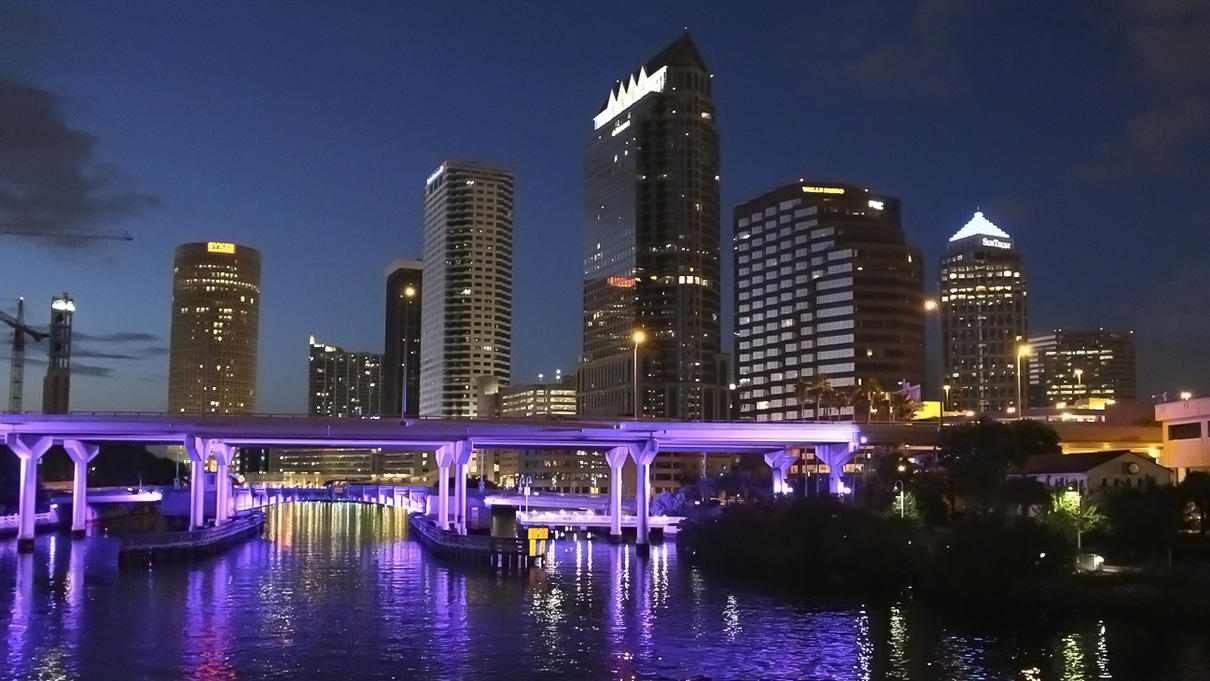
Single-tenant net lease and NNN property has a specific appeal in an exchange: a strong credit tenant on a long lease can turn a fast-moving 45-day identification into a straightforward decision rather than an open-ended search. Florida also carries no state income tax, which pulls exchange-out capital toward Tampa net lease assets from higher-tax states looking for stable, low-management replacement income.
I-4 Corridor Outparcels and Freestanding Sites
The I-4 corridor running northeast out of Tampa toward Lakeland and Plant City has become a steady source of freestanding retail pads and outparcel sites tied to drugstore, quick-service, and auto-service tenants riding distribution and rooftop growth along that stretch. These sites tend to trade on tenant credit and remaining lease term rather than location alone, since the underlying real estate value is secondary to the income stream for many net lease buyers.
Coordination work pulls the lease, guaranty, and any franchisee financials before a site goes on the identification list, since a franchisee-operated location backed by a thin corporate guaranty carries meaningfully more risk than a corporate-operated store.
Checking Lease Structure Before the Clock Runs
Net lease underwriting lives or dies on a handful of lease terms, and those terms need to be pulled and verified before a property is locked into the 45-day identification window rather than discovered afterward.
- Remaining primary lease term and the number and length of renewal options
- Rent escalation schedule and whether increases are fixed, CPI-tied, or absent
- Roof, structure, and parking lot responsibility between landlord and tenant
- Corporate guaranty strength versus a franchisee or single-purpose entity guaranty
- Any co-tenancy or exclusive-use clauses that could affect re-leasing
Hurricane-Rated Roofs and Insurance on Freestanding Buildings
Freestanding net lease buildings across the Tampa Bay area are underwritten with wind mitigation and flood zone designation in mind, and a roof past its expected service life can trigger a much larger premium than the pro forma assumed. Coordination work requests the roof certification and recent wind mitigation inspection early, since a lender or insurer flagging an aging roof late in the process can stall a closing that needs to land inside the 180-day exchange period. Exchangers should verify final coverage terms with their own insurance carrier rather than a seller's estimate.
Out-of-State Capital Moving Into Florida Net Lease
A meaningful share of Tampa net lease demand comes from exchangers selling relinquished property in a higher-tax state and rolling proceeds into Florida assets partly because there is no state income tax on the operating income going forward. That inflow tends to compress cap rates on the strongest credit tenants, which is part of why identifying a backup property under the three-property rule matters even on what looks like a simple net lease purchase.
Comparing a Single Net Lease Asset to a Small DST Allocation
Some exchangers weighing a single freestanding net lease building in the Tampa market also consider splitting the same equity across a Delaware Statutory Trust holding several net lease properties, trading a single point of tenant risk for a diversified but fully passive position. Coordination work lays out both paths when the exchanger's proceeds are large enough to make either workable, since a single-tenant building offers direct control and potential upside from a future lease renewal, while a DST removes management responsibility at the cost of that control.
Neither option is inherently better; the right choice depends on whether the exchanger wants to remain an active decision-maker in the asset or is looking for a passive income stream going into retirement or a longer hold period.
Common 1031 Exchange Questions
Does a corporate-guaranteed net lease reduce underwriting time inside the 45-day window?
It usually simplifies the credit review, since a strong corporate guaranty removes much of the tenant-risk analysis that a franchisee-backed lease requires. It does not remove the need to still verify lease term, roof condition, and insurance before identification.
Why is Tampa net lease pricing sometimes tighter than other Florida metros?
Part of the demand comes from exchange capital leaving states with higher income tax rates and landing in Florida, which has none, and that inflow can push cap rates on the best-located, best-credit assets lower than comparable product elsewhere.
What happens if the roof needs replacement soon after acquisition?
Roof responsibility is defined in the lease, and in most true triple-net structures that obligation sits with the tenant, but coordination work still confirms the specific language rather than assuming a standard allocation. A lender or insurer may also require a certification before closing regardless of which party is contractually responsible.
Can a single-tenant property be identified alongside a multi-tenant NNN center?
Yes, under the three-property identification rule an exchanger can list up to three properties of any type without regard to relative value, so a single-tenant asset and a multi-tenant center can both appear on the same 45-day list.
Does boot apply if the replacement lease has a shorter remaining term than the relinquished property's lease?
Lease term itself does not create boot; boot generally arises from cash or debt relief received in the exchange rather than differences in lease duration. An exchanger's tax advisor should still review the full transaction structure to confirm no taxable boot is created.
Does a longer remaining lease term always mean less risk?
Not necessarily. A long lease backed by a weak guarantor can carry more risk than a shorter lease with a strong national tenant, so lease term should be weighed together with guaranty strength rather than considered on its own.